Blog
Dishwashing Glove Buying Guide | 7 Tips for Choosing the Right Gloves
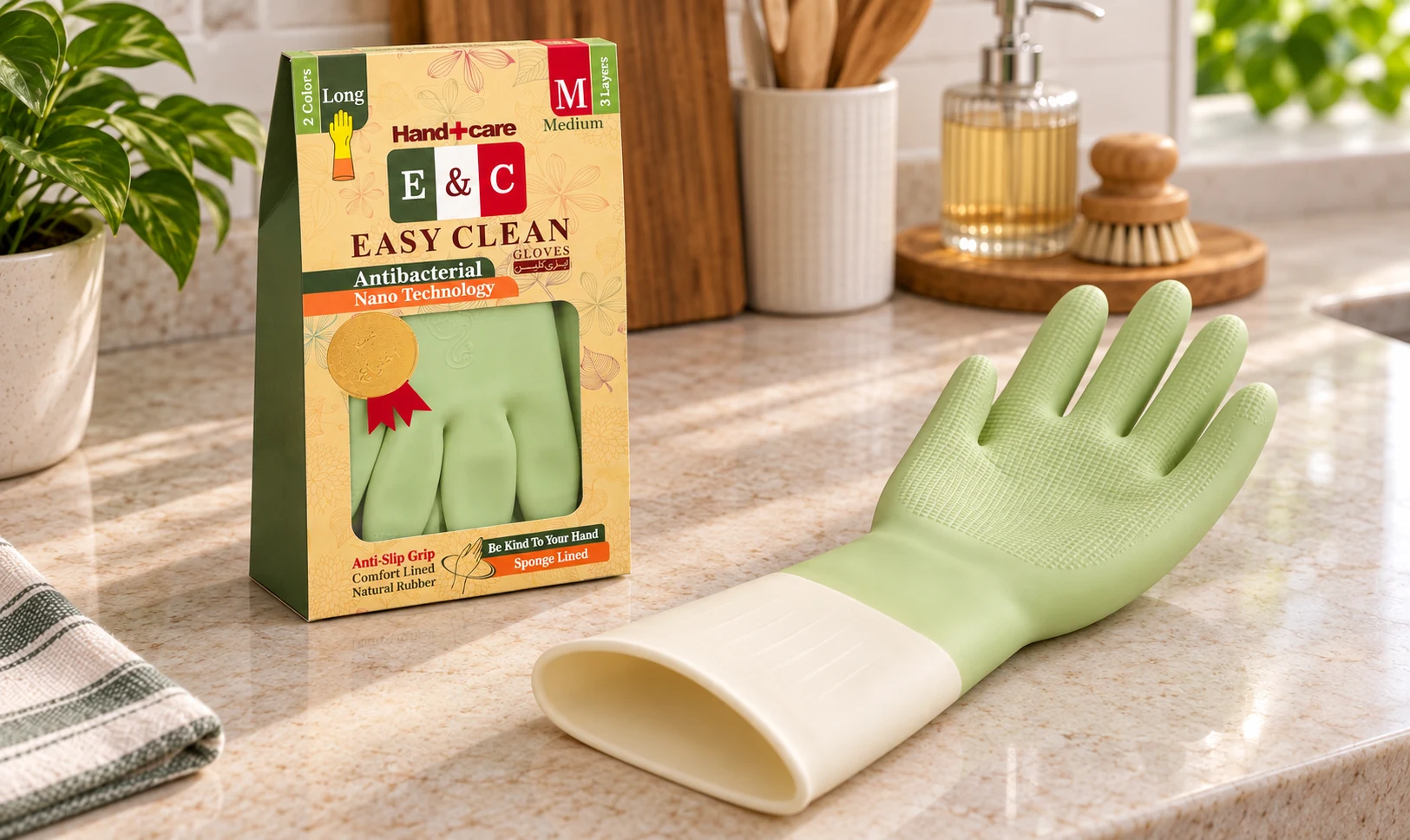
When buying dishwashing gloves, start with the task you will be doing: everyday washing-up, cleaning with a particular detergent, or another kitchen task? Material, thickness and price all play a part in the decision, but none of them alone establishes whether a particular model is suitable. This guide brings together seven criteria to help you choose based on information about the product itself.
1. Establish the intended use before considering the material
Washing dishes is not the same as directly preparing food or holding a hot tray. Read the product’s stated uses and limitations for each task. The general label ‘kitchen gloves’ is not enough to establish suitability for food contact or heat protection.
For example, you should not choose the gloves you use for washing dishes to move a hot saucepan simply because they are thick. Cut, heat and chemical resistance are separate properties and must be specified for that particular model. The HSE glove-selection guidance also considers different hazards separately.
2. Read the material name, but do not draw sweeping conclusions from it
Latex, nitrile, vinyl and silicone are names of different materials, not a definitive ranking of quality. Formulation, design, thickness and the product’s intended use also matter. You cannot assign the same permitted temperature, service life or detergent resistance to every glove made from the same material.
If you need to avoid a particular substance, check the manufacturer’s information about the composition of that specific model. The term ‘hypoallergenic’ alone does not guarantee suitability for everyone. If you have a history of skin reactions, choose based on the known cause and advice from a qualified professional, rather than a marketing label alone.
3. Choose the right size using the guide for that model
Small, medium and large do not mean exactly the same dimensions across all brands. If the product guide asks you to measure your hand, follow that method and compare the result with the chart for that model. Do not choose based on age, sex or someone else’s glove size.
When checking the fit, your fingers should move without uncomfortable pressure, and the glove’s fabric or body should not bunch into folds that get in the way. If the glove shifts around on your hand or you need unusual pressure to hold a light container, check the fit again. There is also no universal rule to ‘go one size up’ when wearing a separate cotton layer underneath: you need to check how the combination fits.
4. Assess cuff length separately from hand size
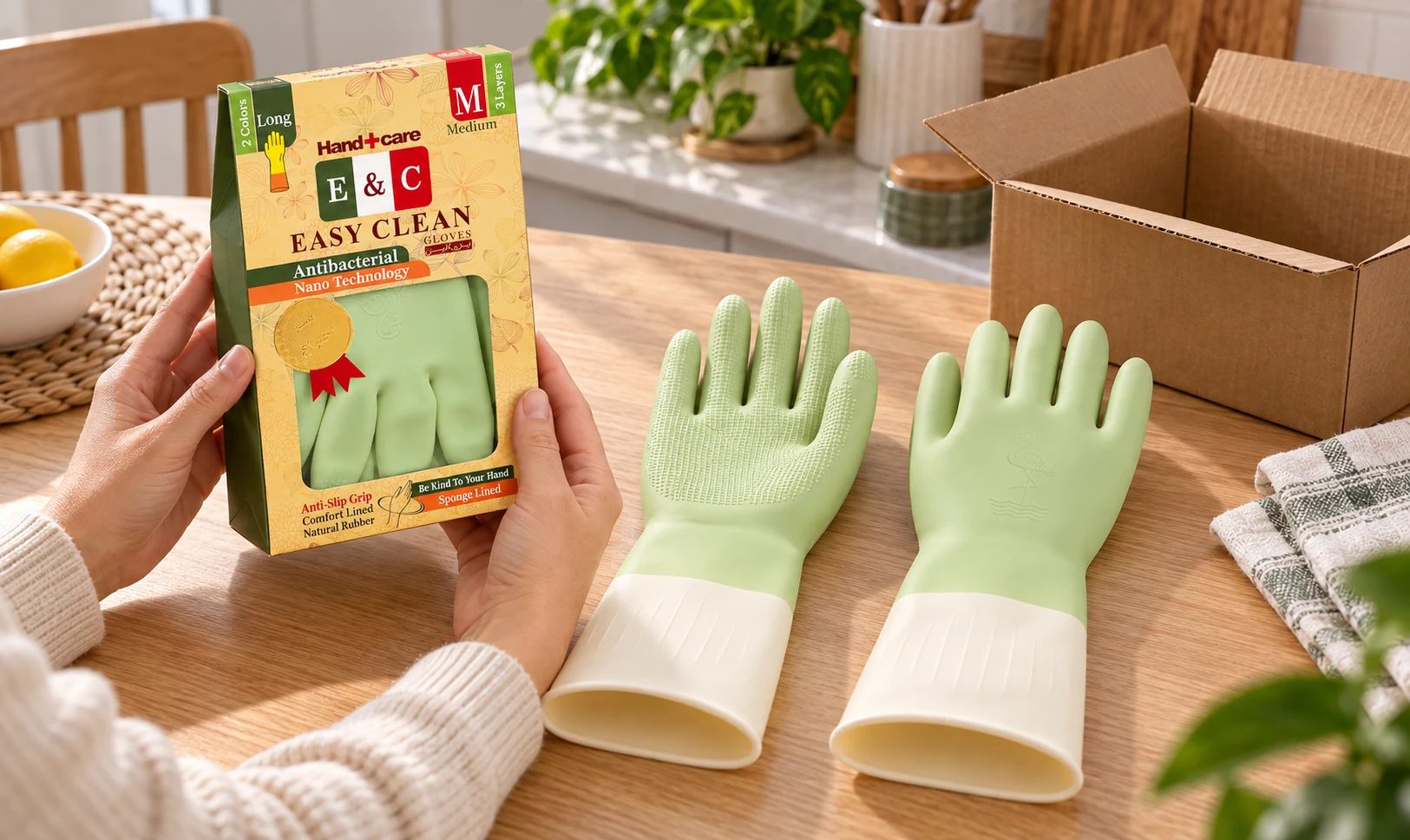
A longer cuff can cover more of the wrist and forearm, but choosing a larger palm size is not necessarily the right way to achieve that coverage. Check how far the water reaches up your hand and arm when washing large pots and dishes, and whether the glove opening stays above the water level.
A long cuff does not guarantee a watertight seal. Submerging the opening or damage to the glove can still let water inside. Extra length does not, in itself, provide greater heat or chemical resistance either. To choose a cuff suited to the way you work, read the comparison of long- and short-cuff gloves.
5. Do not judge control of dishes from photos alone
The texture on the palm and fingers is one feature you can assess, but no texture eliminates the risk of slipping in every situation. Water, suds, grease and fit also affect your control of a dish. Greater thickness may change how hand movements feel, and is not, by itself, a sign of a better choice.
Make an initial fit check with a light, dry, unbreakable object, not a knife, a breakable glass or a hot dish. This home check is not a test that certifies the product’s resistance or safety.
6. Check compatibility with the detergent and the care instructions
Identify the detergent you use and read its label alongside the glove instructions. HSE stresses that no glove material provides equal protection against every substance for every contact time. If compatibility information is unavailable for a particular substance, do not assume the glove is suitable for it simply because it is thick or labelled ‘household’.
For a reusable model, the cleaning, drying and storage instructions should also be clear. Do not turn service life into a number of weeks or months without supporting data. Check the product before every use, and set aside a glove that is damaged or suspected of leaking. If you are still deciding which type you need, explore the difference between reusable and disposable gloves.
7. Compare the cost of the option you will actually order
When comparing prices, use the same model, size, cuff type and number of items per pack. Establish whether the listed amount refers to a pair, a single glove or a pack. Read the delivery charges and exchange terms before paying, too. A cheaper pack in the wrong size will not meet your needs. To check the steps from basket to delivery, see the online dishwashing-glove buying checklist.
Check the size and cuff options on the EasyClean glove product page, and match your final selection to your needs before placing an order. These options are purchasing information; do not interpret them as certification for food contact, heat protection or resistance to a particular substance.
Final selection checklist
- The intended use is specified for this particular model.
- You have read the stated material and the product’s limitations.
- You have chosen hand size and cuff type separately.
- The glove does not interfere with normal hand movement and control.
- Compatibility with the detergent and the care instructions are clear.
- You have checked the quantity, final total and order terms.
The best dishwashing glove for you is a model with clear information and the right fit for your task, not necessarily the thickest or most expensive one, or the one making the boldest claims.